Bargain book November 23, 2021

This book looks interesting. It’s a suggestion from BookBub this morning.

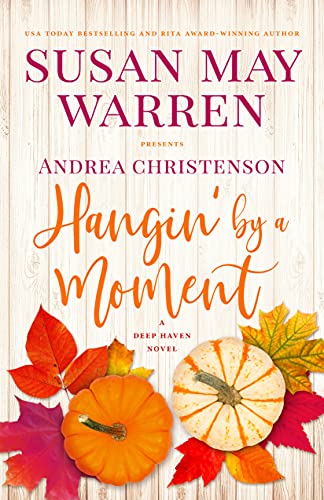
Hangin’ by a Moment (Deep Haven Collection Book 5) 

He just wants to erase his past.

The day Jack—formerly Winston Stewart—walked out of jail, he vowed to keep his conviction a secret. After all, it wasn’t like he’d committed a murder. Just a terrible mistake, and he did his time. Now he wants a new life in a sleepy town where no one knows his name. Deep Haven is the perfect place to start over as a chef. The last thing the former pararescue jumper wants is to get involved. But when Boone Buckam—his friend and the one guy he owes for getting him out of the slammer—asks for help, how can Jack refuse?

She can’t seem to escape hers.

Colleen Decker has already escaped evil once—as a teenager, she was kidnapped by a murderer. But she’s put all that behind her as a trauma nurse in Minneapolis. Or maybe not, because a freak mistake in the ER sends her past crashing down on her. She needs a timeout in her hometown of Deep Haven. She doesn’t plan to stay—even when she’s roped into the job of flight nurse for the town’s Crisis Response Team chopper. Colleen’s not sure why she’s drawn to danger, but she’ll be safe enough. After all, she’ll need training, and her teacher is a handsome former pararescue jumper. What could go wrong?

But facing the past might put their future together in jeopardy.

When Jack said he didn’t want to get involved, he especially meant his heart—but being with Colleen feels like a fresh start. He’ll even climb aboard a chopper again, despite his vows. They’re headed for a happy ending… But secrets never stay buried in a small town. And when disaster strikes one snowy night, they’ll both have to decide if the past will destroy them…or if it just might lead them home.

******************************

If anything else shows up I’ll share it later.

I have enjoyed this author, I hope you do too.

Happy Reading!

Notes on Love Like You’ve Never Been Hurt Nov 21, 2021

Last time we ended just before the topic… Changing the channel on our invasive words and thoughts.

Page 92:

There are a number of components and I will highlight a few that stand out to me. There is so much more to be said, reading the book would be helpful.

...how you can start: Change what you tell yourself. … Talk back to your inner critic.

The most important battles we fight, many times, happen internally.

The past can be healed in only one way: Forgive it. That is the one thing you can do for yourself that can change all of your tomorrows.

**********************

Page 93 – 96

I’m going to deviate from the book here. The author is dealing with shame in this section and uses the example of the Prodigal Son in the Bible. He tells how the father, with love, received his son back home. Despite his “bad boy” lifestyle, wasting his inheritance, and returning home in disgrace.

The father is a picture of the way God loves us and receives us no matter what we’ve done or what has been done to us.

I’m deviating from the book, though, because I think it’s important for us to understand the difference between shame and guilt. The information I’m about to share I’ve seen expressed in many places over the years, but for today’s purpose I found it laid out on verywellmind.com under living with BPD.

I’m paraphrasing here for space sake.

Guilt is the feeling you have related to things you have done. With guilt you can take steps to make things right and move on.

Shame is the feeling you have related to you are, or who you’ve been led to believe you are, your whole self not just an event. Shame it is not as easily dealt with because there is nothing you can do to make restitution. It’s about who you are, not something you’ve done.

There is an excellent ten minute podcast on their website discussing the shame we have been hiding and the link is posted below.

https://www.verywellmind.com/the-verywell-mind-podcast-5113058

The important take away from the podcast was this: there are two things shame cannot survive. One is exposure, tell someone. The second is empathy, tell someone who understands and is supportive.

It’s very important to find the right person to confide your secrets.

If shame is an issue for you, and it is for those of us who have survived an abusive life, this is highly helpful information.

So, back to the book. Check it out for the larger conversation.

I’m not sure what’s next but we will find out.

Notes on Love Like You’ve Never Been Hurt Nov 20, 2021

Continuing on from where we left off last time. A few more relevant quotes.

Self condemnation: page 84

When we let lies overrule love, it affects those around us. We tend to take out our frustrations, lack of self-worth, shame or guilt on those we love. We cannot possibly love like we’ve never been hurt if we do not love ourselves.

another very important quote, same page:

If you struggle with shame, you may have trouble extending grace to others. If you struggle with finding self-worth, you may find it difficult to trust those around you.

Page 88:

We wear all sorts of things that keep us in bondage. Shame. Condemnation. Brokenness. Fear. Anxiety. Anger. Unforgiveness.

We are living in a mental cage. Page 89

Imprisoned with painful memories, with failures from the past, with self-sabotaging thoughts, with fear of an uncertain future.

Page 90:

When you start believing the lies about who you are, you begin to destroy your destiny.

How to change the channel?

That will be tomorrow’s topic.

These quotes are not the whole story, we need to read the book to see the full picture.

Well, I’m reading the book. I’m sure you will find it helpful too.

Current fiction read November 16, 2021

The cover doesn’t do a whole lot for me but I’m really liking the story.

A Distant Heart (Burning Dress Ranch Book 1)

This story is about a successful ranch staffed mainly with women. Women who have been scarred by abuse. It’s a place for them to recover, find a new sense of themselves, and eventually leave with skills to support themselves in a way that will leave them vulnerable never again.

There were many memorable moments so far in this story but the one on page 85 I found most interesting. I’ve never heard it put quite like this and it bears thinking about.

“If you come to understand what Jesus did on the cross — the incredible sacrifice — it makes humbling yourself a little easier. You have to be humble to forgive. But it’s so freeing to live without bitterness”

Forgiving, humble. I guess I can see how humble would fit in with forgiving. It is definitely necessary to lay down and let go of some things. It wouldn’t work well if we were proud and defiant. Food for thought.

So, on to the story.

Two wounded souls. One loving, relentless God.

Welcome to Burning Dress Ranch.

Miss Sally, the mysterious and secretive owner of Burning Dress, established the operation with a very particular mission—to make sure her charges leave with a useful skill, and to share the love of Christ with their hurting, wounded souls.

Cecelia Huggins, broken by a bitter, shameful divorce, has come to Burning Dress to take control of her own destiny. She wants to work and learn. She doesn’t want friends, and she certainly doesn’t ever want to fall in love again.

Jax Taylor is foreman of the Burning Dress and he’s the perfect man for the job. Most of the ranch hands are women who are healing from some pretty tough blows. Just like them, he’s pushing past his own hurts and would rather drink poison than fall in love again.

Miss Sally has had some tough cases before but Cecelia and Jax may be the toughest. How do you convince two stubborn hearts that the only way to find rest for their souls is to give in to love?

***************************

This story is still a bargain if you are interested.

Happy Reading y’all

Current Read “How can I ever really forgive?” November 15, 2021

Love Like You’ve Never Been Hurt, now that’s something many of us can relate to. Having been hurt.

This book has been out in the open on a shelf for a number of years. Tonight I decided I need to read one of the many non fiction books I’ve been stock piling the last few years. The name of this one popped into my mind before I could even cross the room.

It’s something, because as I read the first two pages I found a conversation pretty much like the one I’ve been having with a friend recently. Hurt, betrayal, pain, a universal problem.

This book talks about all of that and it includes the author’s personal story of pain. Lending credibility because he has walked this road himself.

Jentezen Franklin is a well known public figure and his story is out there but this time it is his telling.

I learned of him in an interview on a popular podcast. I was impressed and bought his book the first chance I got. In paperback so I could mark it up and take better notes.

I’m looking forward to this read. I think it will answer a lot of questions and probably raise a few more.

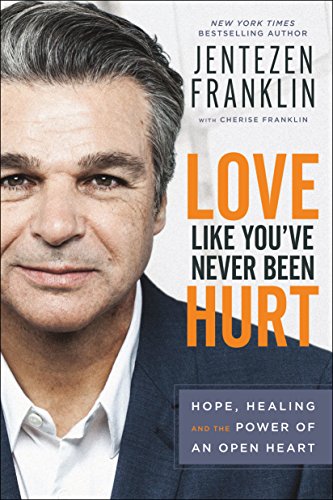
Love Like You’ve Never Been Hurt: Hope, Healing and the Power of an Open Heart

The human heart was created with a great capacity to love. But along with that comes a great capacity to feel pain. There is no denying that those who love us, who are closest to us, can wound us the most profoundly. That kind of pain can be difficult, if not impossible, to overcome. And it can feel even more impossible to continue loving in the face of it. Yet that is exactly what we are called to do.

Sharing his own story of personal pain, pastor and New York Times bestselling author Jentezen Franklin shows us how to find the strength, courage, and motivation to set aside the hurt, see others as God sees them, and reach out in love. Through biblical and modern-day stories, he discusses different types of relational disappointment and heartache, and answers questions such as Why should I trust again? and How can I ever really forgive?

The walls we build around our hearts to cut us off from pain are the very walls that block us from seeing hope, receiving healing, and feeling love. Here are the tools and inspiration you need to tear down those walls, work through your wounds, repair damaged relationships, and learn to love like you’ve never been hurt.

C-PTSD – The hardest part of socializing. November 08, 2021

Photo by Engin Akyurt on Pexels.com

I need to talk to figure some things out before I explode.

The thing I hate the most about socializing? The aftermath. There is always a price to pay.

At the moment I am feeling needy, insecure, weak and codependent. Maybe not codependent so much as the first three.

I don’t like it.

I didn’t want to go to the social event in the first place but I caved. The carrot waved in front of my nose was a reason to be there.

I said yes, as I often do. It turned out better than expected and I enjoyed being there with everyone but…

I wish I had control over triggers and the resulting reactions, but I don’t.

*****

With the over use of the word “I” you can tell this is all about me.

The thing is, it is but it isn’t.

It was easy to pick up on the awkwardness and the hurt feelings on why I haven’t been going to the monthly meetings.

I’ve tried to explain it is because of the emotional/mental space I am in this year.

I’ve tried to explain about this and the whole PTSD struggle influencing these decisions.

The trouble is it isn’t met with a real understanding of the issue, and why would there be when they have not experienced it personally.

And then there is the “you don’t look sick” assessment adding doubt of my reasons.

I feel bad I am making them feel uncomfortable and hurt. I’ve tried to say things in a way to leave as little hurt as possible. I feel like I’m not very good at achieving this goal. Maybe it’s an impossible goal.

***********

I’ve thought about telling them my story, more than the bits and pieces already shared. I can’t do that though. They don’t deserve to be saddled with hearing the devastating details of my life.

The worst thing about all of this is the domino effect. Suddenly I am feeling needy, insecure, weak and maybe even codependent in other relationships.

It all has me wanting to ….

I’m not going to name what I’m wanting to do …

Saying these things out loud could lead me to making decisions I would later regret.

*****************

This too shall pass, it always does.

Will life look the same afterward.

Probably not, maybe not.

I don’t know.

*********************

It’s impossible to walk through the fires of life and not win-some lose-some.

Resources PTSD related October 31, 2021

An ongoing discussion today prompts the sharing of these resources for those of us with abusive backgrounds. The effects can be far reaching but not beyond help.

I was introduced to these books when I joined a group working with other women like me, and they were invaluable. A public library may even be a good place to find these.

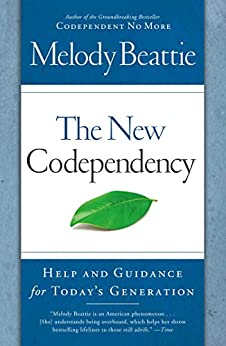
The New Codependency: Help and Guidance for Today’s Generation

In Codependent No More, Melody Beattie introduced the world to the term codependency. Now a modern classic, this book established Beattie as a pioneer in self-help literature and endeared her to millions of readers who longed for healthier relationships. Twenty-five years later concepts such as self-care and setting boundaries have become entrenched in mainstream culture. Now Beattie has written a followup volume, The New Codependency, which clears up misconceptions about codependency, identifies how codependent behavior has changed, and provides a new generation with a road map to wellness.

The question remains: What is and what is not codependency? Beattie here reminds us that much of codependency is normal behavior. It’s about crossing lines. There are times we do too much, care too much, feel too little, or overly engage. Feeling resentment after giving is not the same as heartfelt generosity. Narcissism and self-love, enabling and nurturing, and controlling and setting boundaries are not interchangeable terms. In The New Codependency, Beattie explores these differences, effectively invoking her own inspiring story and those of others, to empower us to step out of the victim role forever. Codependency, she shows, is not an illness but rather a series of behaviors that once broken down and analyzed can be successfully combated.

***********************

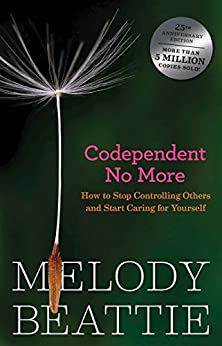
Codependent No More: How to Stop Controlling Others and Start Caring for Yourself

In a crisis, it’s easy to revert to old patterns. Caring for your well-being during the coronavirus pandemic includes maintaining healthy boundaries and saying no to unhealthy relationships.

The healing touchstone of millions, this modern classic by one of America’s best-loved and most inspirational authors holds the key to understanding codependency and to unlocking its stultifying hold on your life.

Is someone else’s problem your problem? If, like so many others, you’ve lost sight of your own life in the drama of tending to someone else’s, you may be codependent–and you may find yourself in this book–Codependent No More. The healing touchstone of millions, this modern classic by one of America’s best-loved and most inspirational authors holds the key to understanding codependency and to unlocking its stultifying hold on your life.

************************

Along with these two books this next one is important companion book

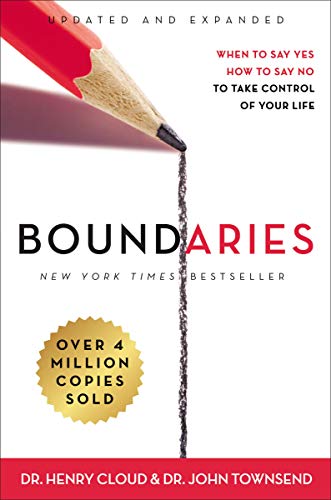
Boundaries Updated and Expanded Edition: When to Say Yes, How to Say No To Take Control of Your Life

Do you feel like your life has spiraled out of control? Have you focused so much on being loving and unselfish that you’ve forgotten your own limits? Do you find yourself taking responsibility for other people’s feelings and problems? In Boundaries, Drs. Henry Cloud and John Townsend teach you the ins and outs of setting the boundaries that will transform your daily life.

Boundaries, a New York Times bestseller, will give you the tools you need to learn to say yes and know how to say no. Drs. Henry Cloud and John Townsend are here to share the lessons they’ve learned in their years of practicing psychology and studying the patterns and practices that support clear biblical boundaries.

C-PTSD conversation October 28, 2021

Walls or Boundaries?

This week I have been thinking about walls.

The emotional walls many of us put up to protect ourselves from hurt (emotional) or harm (physical).

The trouble with those walls – they don’t just keep out the bad stuff, they keep out the good stuff too.

Some of us have flimsy walls that go up and down, depending on what life is doing to us in the moment.

Others have walls that have grown in thickness and height enough to compare with Fort Knox. That’s the famous institution where the USA keeps it’s gold bullion. The ultimate in fortress walls.

The thicker and higher, the harder it is to bring them down, never mind let someone in for a moment. A very lonely life.

At this stage for me, I have walls that go up and down. They are mostly down but there are still circumstances where I feel threatened, at risk, distrustful, and the walls go up.

A small percentage of the time they may be warranted but the rest of the time the threat I perceive is not real.

I’ve being trying to find a solution, a way to handle triggers and paranoia in certain circumstances and that led me to thinking about boundaries.

The beauty of boundaries is the height. They can be markings on the road, they can be curbs, guardrails, fences. They are usually something that allows for communication and interaction while still acting as a barrier.

I think changing from walls to boundaries will take some serious consideration. A change in mindset.

I haven’t figured it all out yet. How to establish something appropriate and workable. Since we don’t actually have physical boundaries it has to be something that can be expressed in words. Something I can live with and put into practice.

Mostly I feel uncomfortable in public spaces. It will be a challenge to find ways to make that work. What would it take to make me feel safe.

At this point I have no idea what that would even look like but I’m willing to consider it.

Mainly because walls are not working out all that well for me, wanting to leave isolation behind.

I’ll let you know how it goes.

*******************************

This is a book I’ve had on my shelf for a very long time. I think I need to read it again. Maybe it will give me some good ideas.

Boundaries Updated and Expanded Edition: When to Say Yes, How to Say No To Take Control of Your Life

Boundaries is the book that’s helped over 4 million people learn when to say yes and know how to say no in order to take control of their lives.

Does your life feel like it’s out of control? Perhaps you feel like you have to say yes to everyone’s requests. Maybe you find yourself readily taking responsibility for others’ feelings and problems. Or perhaps you focus so much on being loving and unselfish that you’ve forgotten your own limits and limitations. Or maybe it’s all of the above.

In the New York Times bestseller, Boundaries, Drs. Henry Cloud and John Townsend help you learn when to say yes and know how to say no in order to take control of your life and set healthy, biblical boundaries with your spouse, children, friends, parents, co-workers, and even yourself.

Now updated and expanded for the digital age, this book continues to help millions of people around the world answer these tough questions:

  • Can I set limits and still be a loving person?
  • What are legitimate boundaries?
  • How do I effectively manage my digital life so that it doesn’t control me?
  • What if someone is upset or hurt by my boundaries?
  • How do I answer someone who wants my time, love, energy, or money?
  • Why do I feel guilty or afraid when I consider setting boundaries?
  • How do boundaries relate to mutual submission within marriage?
  • Aren’t boundaries selfish?

C-PTSD conversation October 22, 2021

FORGIVENESS

Forgiveness, or the lack of it, is a roadblock to a peaceful life, unforgiveness impacts the victim’s life more than it does the abuser’s. The abuser does not deserve to be forgiven and probably doesn’t even care about having it one way or the other.

There is a full spectrum of emotions to be had as a result of holding on to hurt. At one end – I hate him and will never forgive him (or her,) at the other end – I know I need to forgive and I want to but I keep taking it back. The level of peace or distress we have depends on which end of the spectrum we fall on.

Unforgiveness can act like a cancer. The harder we hang on to it the more it takes over our life. Bitterness and a host of other emotions can take root and grow to gigantic proportions. There is no peace to be had if that happens.

I guess if we have been severely abused and feel dispassionate about everything we don’t have raging emotions to deal with and we can live what appears to be a normal happy life. But sooner or later something will trigger a reaction, maybe even something gigantic. That’s me and my life.

It has taken many decades but I have forgiven my dad.

His abuse took on many forms. It started a few weeks after conception, rage at imminent and unwanted fatherhood. All of the years long abuse was fueled by rage, addictions, and immaturity. He wasn’t my only abuser, he allowed others access when it suited him. I can figure out about 6 of them, including a pedophile, but there is a knowing that I can’t escape, even though I want to, there were more, maybe even many more. You can see why all my memories have been repressed. There are a few vague memories, puzzling thought patterns, and many triggers, all leaving clues. And then a brother who insisted I admit I was abused.

You can also understand why, when I was 18 and he was found dead, I was glad, relieved.

After many decades I have forgiven my dad and the changes in my emotional well being have been dramatic. I’m grateful.

There were other significant abusers though and the forgiveness process for them is still ongoing, with no end in sight. I haven’t been able to forgive yet but at the same time I choose not to hate. That in itself has made life a better place for me.

They say that the abused often choose a spouse similar to their abuser. In my case he was nothing like my dad and I thought I had done well.

Dad’s abuse loomed large and took over the whole conversation. It took decades to figure out what was going on with these other two relationships. Emotional abuse is difficult to identify even though the damage is greater.

Emotionally unavailable was the problem. It manifests itself in a number of different ways, all of them hurtful. Physical abuse, I could have said I’m done. But in this case I couldn’t see any workable way to deal with the problem.

Inability to name the issues responsible added a whole new layer of hurt, in both relationships.

Eventually I knew I had to take the bull by the horns and force some sort of decision. We’ve been living apart for nearly two decades. The most distressing and ongoing issue was I still couldn’t figure out why. I needed to understand.

I’ve been praying about forgiveness toward him for years and gotten nowhere.

The other morning was a breakthrough moment for me. In a moment of clarity I suddenly recognized that the parent I patterned a spouse after was not my dad but my mother.

I married a man like my mother.

That thought made so much sense, it was like chains falling off. It’s that simple and I don’t need to figure anything else out.

There is still a long way to go but I don’t think it will take decades now. There is freedom in forgiveness and that will be enough when it comes.

I’m still praying though, because I still need help.

**********************************************

Photo by Ashithosh U on Pexels.com

What I wish I could have had.